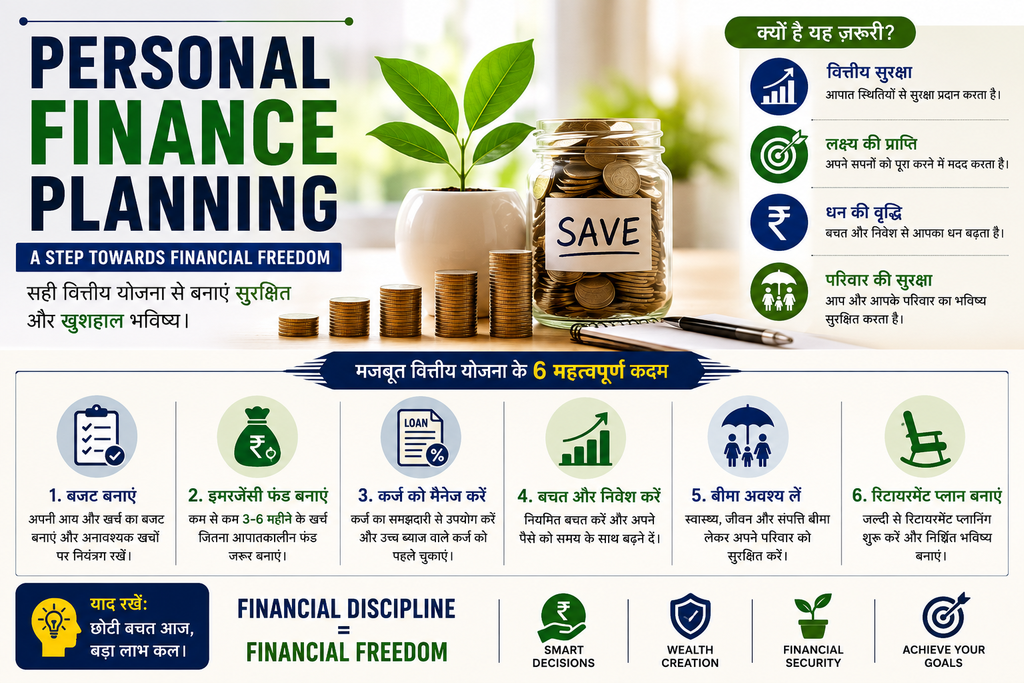
In today’s fast-changing economic environment, effective personal finance planning has become more important than ever. Whether you are a salaried employee, a business owner, or a freelancer, managing your finances wisely can help you achieve long-term financial security and peace of mind. Personal finance is not just about saving money; it involves budgeting, investing, debt management, tax planning, and building wealth over time.
Understanding Personal Finance
Personal finance refers to the management of an individual’s financial resources. It includes income, expenses, savings, investments, insurance, and retirement planning. A well-structured financial plan helps individuals meet short-term needs while preparing for future goals such as purchasing a home, funding education, starting a business, or enjoying a comfortable retirement.
The foundation of personal finance lies in understanding cash flow. Knowing how much money comes in and where it goes every month allows individuals to make informed financial decisions. Without proper tracking, unnecessary expenses can reduce savings potential and create financial stress.
The Importance of Budgeting
Budgeting is the first step toward financial success. A budget acts as a roadmap for managing income and expenses. It helps individuals prioritize essential spending while identifying areas where costs can be reduced.
A simple budgeting rule is the 50-30-20 method:
- 50% of income for necessities such as rent, food, and utilities.
- 30% for lifestyle expenses and entertainment.
- 20% for savings and investments.
Regular budgeting can prevent overspending, increase savings, and improve financial discipline. Modern budgeting apps and digital tools make it easier than ever to track expenses and monitor financial goals.
Building an Emergency Fund
Unexpected situations such as medical emergencies, job loss, or economic downturns can create financial challenges. An emergency fund provides a safety net during difficult times.
Financial experts generally recommend maintaining an emergency fund that covers at least three to six months of living expenses. Keeping this money in a liquid and easily accessible account ensures that funds are available when needed without disrupting long-term investments.
Managing Debt Responsibly
Debt can be useful when managed properly, but excessive borrowing may lead to financial difficulties. Common forms of debt include personal loans, home loans, student loans, and credit card balances.
To maintain healthy finances:
- Pay loan installments on time.
- Avoid unnecessary borrowing.
- Keep credit card utilization low.
- Focus on repaying high-interest debt first.
Responsible debt management also helps maintain a strong credit score, which is essential for obtaining loans at favorable interest rates.
The Role of Savings and Investments
Saving money is important, but investing is essential for long-term wealth creation. Inflation reduces the purchasing power of money over time, making investments necessary to preserve and grow wealth.
Some popular investment options include:
- Fixed Deposits (FDs)
- Public Provident Fund (PPF)
- Mutual Funds
- Exchange-Traded Funds (ETFs)
- Stocks
- Bonds
- Real Estate
Diversification is a key investment principle. By spreading investments across different asset classes, investors can reduce risk and improve potential returns.
Understanding Risk and Return
Every investment carries a certain level of risk. Generally, investments with higher return potential also involve higher risk. Before investing, individuals should assess their financial goals, investment horizon, and risk tolerance.
Young investors with long-term goals may allocate a larger portion of their portfolio to equity investments, while individuals approaching retirement may prefer more conservative investment options. Regular portfolio reviews help ensure that investments remain aligned with changing financial objectives.
Retirement Planning
Retirement planning should begin as early as possible. Starting early allows investors to benefit from the power of compounding, where earnings generate additional earnings over time.
Retirement planning may include:
- Employer-sponsored retirement schemes
- Pension plans
- Provident funds
- Long-term mutual fund investments
- Retirement-focused savings accounts
Even small monthly contributions can grow significantly over several decades, helping individuals maintain their desired lifestyle after retirement.
Insurance as a Financial Protection Tool
Insurance plays a vital role in financial planning by protecting individuals and families from unexpected financial losses. Common types of insurance include health insurance, life insurance, vehicle insurance, and property insurance.
Adequate insurance coverage helps reduce financial risk and prevents major expenses from affecting long-term financial goals. Reviewing insurance policies periodically ensures that coverage remains sufficient as circumstances change.
Tax Planning Strategies
Effective tax planning helps individuals legally reduce tax liabilities and maximize savings. Many governments provide tax-saving investment options that encourage long-term financial planning.
Tax-efficient strategies may include:
- Investing in eligible tax-saving instruments.
- Utilizing retirement accounts.
- Maintaining proper financial records.
- Consulting qualified tax professionals when necessary.
Good tax planning can improve overall financial efficiency and increase available funds for investments and savings.
Financial Discipline and Long-Term Success
Financial success is not determined by income alone. Consistent financial habits often have a greater impact than earning a high salary. Key habits include:
- Saving regularly.
- Investing consistently.
- Avoiding unnecessary debt.
- Tracking expenses.
- Reviewing financial goals annually.
Building wealth requires patience, discipline, and a long-term perspective. Market fluctuations and economic uncertainty are normal, but disciplined investors often achieve better outcomes over time.
Conclusion
Personal finance planning is a lifelong process that helps individuals achieve financial security, independence, and peace of mind. By creating a budget, maintaining an emergency fund, managing debt responsibly, investing wisely, planning for retirement, and protecting assets through insurance, individuals can build a strong financial foundation. The earlier financial planning begins, the greater the opportunity to benefit from long-term growth and financial stability. Smart financial decisions today can create a more secure and prosperous future for years to come.